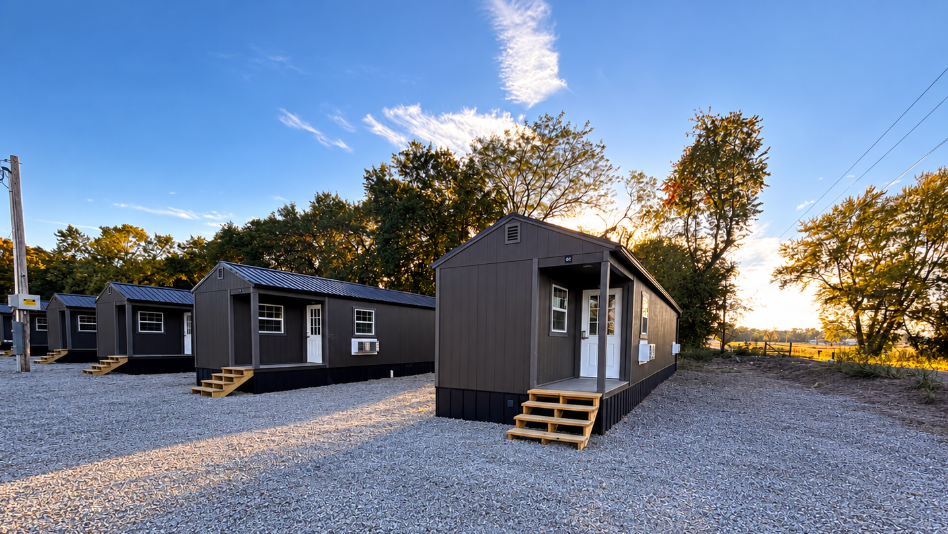
How reliable internet connectivity and modern security systems can increase property value, attract residents, and make tiny home communities easier to manage.
Tiny home communities are becoming an increasingly attractive housing option for people seeking affordability, simplicity, and a more connected lifestyle. Whether designed for permanent residents, retirees, vacationers, or short-term renters, these communities offer a unique combination of independence and shared amenities.
However, today's residents expect more than just an affordable place to live. They want reliable internet connectivity, a secure environment, and modern conveniences that make everyday life easier.
For tiny home community owners and developers, two investments can make a significant difference: professionally managed Wi-Fi and strategically placed surveillance cameras.
Together, these technologies can improve the resident experience, enhance security, reduce management headaches, and help a community stand out from competing properties.
1. Reliable Wi-Fi Is No Longer a Luxury — It's a Necessity
Today's residents depend on internet access for nearly everything. From working remotely and streaming entertainment to video calling family members and managing smart home devices, reliable connectivity has become an essential utility.
Unfortunately, tiny home communities can face unique connectivity challenges.
Individual homes may be located far from traditional internet infrastructure, and providing a separate internet connection to every tiny home can be expensive and complicated.
A professionally designed managed Wi-Fi network offers a better solution.
Instead of requiring every resident to arrange an individual internet connection, community owners can provide internet access throughout the property using a centrally managed network.
Benefits include:
- Reliable internet access throughout the community
- Fewer individual internet installations
- Simplified billing and service management
- Support for remote workers and streaming services
- Centralized monitoring and troubleshooting
- A valuable amenity that helps attract new residents
For community owners, managed Wi-Fi can turn internet connectivity from a recurring resident complaint into a competitive advantage.
2. Better Wi-Fi Can Also Improve Cellular Calling
One frequently overlooked benefit of a strong Wi-Fi network is its ability to improve the cellular calling experience.
Many tiny home communities are located in rural areas, wooded properties, or locations where cellular signals are weak.
Residents may struggle with dropped calls, poor voice quality, or unreliable indoor reception.
Fortunately, most modern smartphones support a feature called Wi-Fi Calling, which allows compatible phones to make and receive calls over an internet connection instead of relying entirely on a nearby cellular tower.
With a properly designed Wi-Fi network, residents may experience:
- More reliable phone calls in areas with weak cellular coverage
- Improved indoor calling where Wi-Fi coverage is strong
- Fewer dropped calls caused by weak cellular signals
- Better connectivity for emergency communications when Wi-Fi Calling is available
Wi-Fi Calling requires a compatible device, carrier support, and a working internet connection. It does not physically increase the cellular signal or replace reliable emergency communication arrangements.
For tiny home communities in rural locations, this capability can be a major selling point.
Better Wi-Fi can mean better phone connectivity — even where cellular coverage is poor.
3. Surveillance Cameras Help Protect Residents and Property
Security is an important consideration for any residential community, regardless of size.
Tiny home communities often feature shared entrances, parking areas, walking paths, community buildings, and other common spaces.
Installing a professionally designed surveillance camera system can help property owners monitor these areas and discourage unwanted activity.
Strategically positioned cameras can provide visibility into:
- Community entrances and exits
- Parking lots and vehicle storage areas
- Mailboxes and package delivery locations
- Community centers and shared facilities
- Maintenance buildings and equipment storage
- Other appropriate common areas
Modern surveillance systems can provide high-definition video, remote viewing, motion-based alerts, and recorded footage for reviewing incidents.
Visible cameras may discourage theft, vandalism, and unauthorized access while helping residents feel more comfortable in their community.
Importantly, cameras should be installed with resident privacy in mind, focusing on appropriate shared spaces rather than private living areas.
4. Remote Property Management Becomes Easier
Many tiny home communities operate with limited on-site staff. Some are managed by owners who live elsewhere or oversee multiple properties.
Managed Wi-Fi and surveillance technology can make these operations more efficient.
With the right system, authorized property managers can remotely:
- Check the status of community internet equipment
- Identify network outages and connectivity problems
- View authorized security camera feeds
- Review recorded video following an incident
- Receive notifications about selected security events
- Monitor the health of connected equipment
Rather than making unnecessary trips to the property, managers can identify certain problems remotely and determine whether on-site assistance is needed.
This can save time, reduce operating expenses, and improve response times.
For owners managing multiple communities, centralized technology management can be particularly valuable.
5. A Stronger Amenity Package Can Attract More Residents
Competition among residential communities continues to evolve.
Prospective residents compare properties based on location, price, amenities, convenience, and overall quality of life.
A tiny home community that offers reliable internet and thoughtfully designed security features may have an advantage over one that leaves residents to solve these problems themselves.
Imagine advertising your community with:
"High-Speed Community Wi-Fi and Video-Monitored Common Areas Included."
For remote workers, retirees, and residents who depend on dependable connectivity, this can be an appealing feature.
A modern technology package may also help owners justify competitive rental rates, improve resident satisfaction, and support long-term occupancy.
While results depend on the local market, reliable Wi-Fi and visible security investments can contribute to a more attractive community.
6. One Network Can Support Wi-Fi, Cameras, and Future Technology
One of the biggest advantages of planning Wi-Fi and surveillance systems together is the opportunity to build a unified technology infrastructure.
Rather than installing separate networks for every system, a properly designed infrastructure can support multiple services while keeping resident internet traffic and security equipment logically separated.
For example, the community's network infrastructure may support:
- Resident Wi-Fi access
- Surveillance camera connectivity
- Smart access control systems
- Connected community facilities
- Maintenance and management equipment
- Future smart-property technologies
Proper network segmentation, security controls, and bandwidth planning are essential to ensure these systems operate reliably.
Designing the infrastructure correctly from the beginning can also reduce the cost and complexity of future expansion.
For new tiny home developments, incorporating Wi-Fi and camera infrastructure during construction is often easier and more cost-effective than retrofitting it later.
7. Potential for Additional Revenue and Long-Term Value
Managed Wi-Fi can offer financial benefits beyond resident convenience.
Depending on the community's business model, owners may choose to include internet access in monthly rent, charge a separate technology or amenity fee where permitted, or offer optional upgraded services.
A community-wide approach may also simplify administration compared with numerous individual service arrangements.
Surveillance cameras can provide additional value by helping protect shared property, document incidents, and support more efficient operations.
Together, these improvements may contribute to:
- Greater appeal to prospective residents
- Stronger resident retention
- Potential amenity-related revenue
- Reduced administrative workload
- Better protection of community assets
- Improved long-term property marketability
The financial return will depend on installation costs, ongoing service expenses, occupancy, and local demand.
8. Professional Design Makes the Difference
Not all Wi-Fi networks and camera systems are created equal.
Tiny home communities present special challenges because buildings may be spread across large properties, surrounded by trees, or constructed using materials that interfere with wireless signals.
A successful installation requires careful planning.
For Wi-Fi, this includes evaluating coverage areas, internet bandwidth requirements, equipment placement, outdoor conditions, and the number of connected devices.
For surveillance, it means selecting appropriate camera locations, ensuring adequate lighting and recording capacity, and establishing secure remote access.
A professionally managed system also needs ongoing maintenance, monitoring, and technical support.
Choosing the right technology partner can make the difference between a dependable amenity and a system that creates constant frustration.
Why Choose Kharma for Your Tiny Home Community?
At Kharma, we specialize in managed Wi-Fi and surveillance solutions for properties that need dependable connectivity and practical security technology.
We understand that every community is different. A small development with 15 tiny homes has different requirements than a sprawling property with 150 homes, shared amenities, and multiple entrances.
Our goal is to help property owners build systems that meet their needs today while providing flexibility for future growth.
Whether you're planning a new tiny home community or improving an existing property, Kharma can help you explore solutions for:
- Community-wide managed Wi-Fi
- Outdoor wireless coverage
- Surveillance cameras for shared areas
- Remote system monitoring and management
- Scalable network infrastructure
Make Your Tiny Home Community More Connected and Secure
Tiny home living may be about simplifying life, but that doesn't mean residents should have to sacrifice reliable connectivity or modern amenities.
Investing in managed Wi-Fi and surveillance cameras can help create a community that is more convenient for residents, easier for owners to manage, and more competitive in today's housing market.
A connected community is a more attractive community.
If you're developing or operating a tiny home community, Kharma can help you evaluate the right Wi-Fi and surveillance solutions for your property.
Contact Kharma today to discuss your community's technology needs.